SMART FARM · ENVIRONMENTAL SENSORS
The six readings that decide how a poultry house performs — on one cable
A house you can measure is a house you can control. ENM puts the six sensors a poultry farm actually needs on a single RS485 line — daisy-chained up to 2,000 m into one controller or dashboard, with alerts to LINE. Buy them one at a time, or let us design the whole system.
What we measure, and why
These six were not chosen because they are easy to measure. Each one is tied directly to cost or to flock performance. The figures under “when to act” are general poultry-industry guidance — use them as a starting point and adjust for breed, flock age and your integrator’s own manual.
| What we measure | Why it matters | When to act | ENM device |
|---|---|---|---|
| 1Ammonia NH₃ | Attacks the respiratory lining. Birds eat less, grow slower, FCR worsens, and you see more eye irritation and footpad lesions. A human nose adapts to it within minutes — which is exactly why it has to be measured rather than judged. | Hold below 25 ppm continuously, and below 10 ppm for chicks. Damage begins around 10–20 ppm. | HX-NH3-N01 |
| 2CO₂ + temperature + humidity | CO₂ tells you whether minimum ventilation is genuinely enough — above all during brooding, when the house is shut down to hold heat. Temperature paired with humidity is what the bird actually feels, which is not the number on the thermometer. | CO₂ below 3,000 ppm (outside air is about 400 ppm) · relative humidity 50–70 %RH | HX-CO2WS-N01-2 |
| 3Air velocity at bird level | In a tunnel house the air is the air conditioning. Uneven velocity creates dead spots, birds crowd, and weights come out uneven down the length of the house. Velocity calculated from cross-sectional area is almost always higher than what is measured at bird level. | 2 m/s is the working standard for grown birds, 3 m/s the maximum for cooling (at 3 m/s the effective temperature is roughly 10–12 °C below actual) · never for chicks | W410G1 |
| 4Static pressure | Tells you whether air is entering through the inlets you designed or leaking in somewhere else. When pressure drops, the jet no longer reaches the centre of the house and falls straight onto the chicks. It is the number you set your inlets by. | Minimum ventilation typically runs around 12–25 Pa (0.05–0.10 in w.c.), depending on house width and weather | ENM TS-4000 |
| 5Water flow | Water intake is the earliest health signal a flock gives you — earlier than visible symptoms, earlier than feed. An unexplained drop in a single day is a reason to walk the house now. It also catches leaking lines and stuck nipples. | Watch the daily trend rather than any single number · water-to-feed ratio typically 1.6–2.0 : 1 at normal temperatures | ZJLCD-485 |
| 6Electricity | Power is the largest fixed cost after feed, and almost all of it is fans and lighting. Metering each house separately shows you which cycle drew abnormally, which motor is creeping up in current before it fails, and what electricity actually costs you per kilo of bird. | Compare kWh per cycle and kWh per kg of bird between houses and between flocks · a steady rise in current on the same motor is a warning before it fails | ADW300 |
Where they go in the house
Placement matters as much as the sensor. An ammonia probe hung too high gives a number that looks fine but has nothing to do with the air the birds are breathing; the same is true of an air-velocity probe set too close to the wall. This is the layout we use when we specify a site.
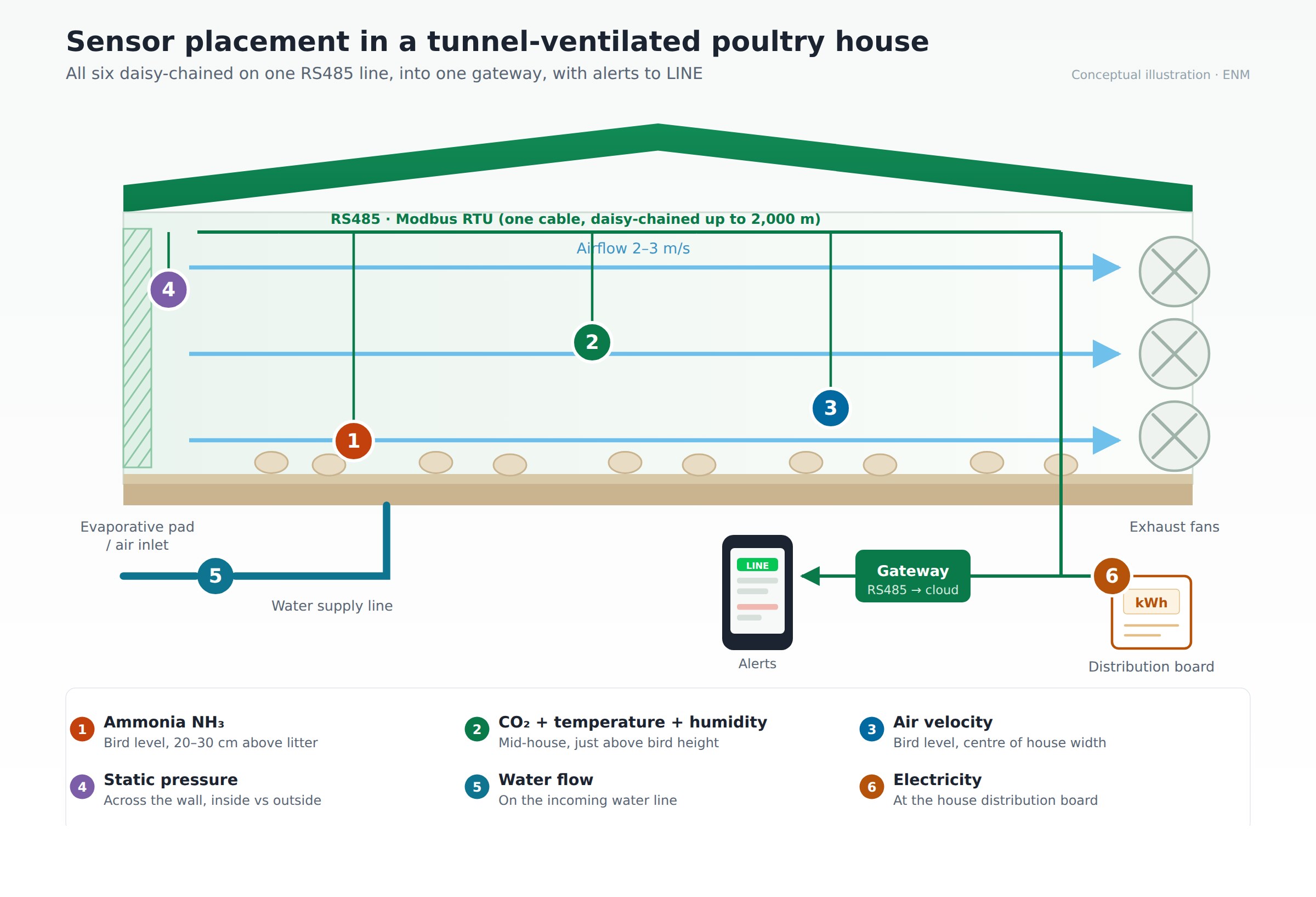
If the farm already runs a controller or SCADA system, every one of these connects straight into it as long as it speaks Modbus RTU. Nothing existing has to be replaced.
The devices
Every one is available on its own. Full specifications and manuals for each are available on request over LINE.
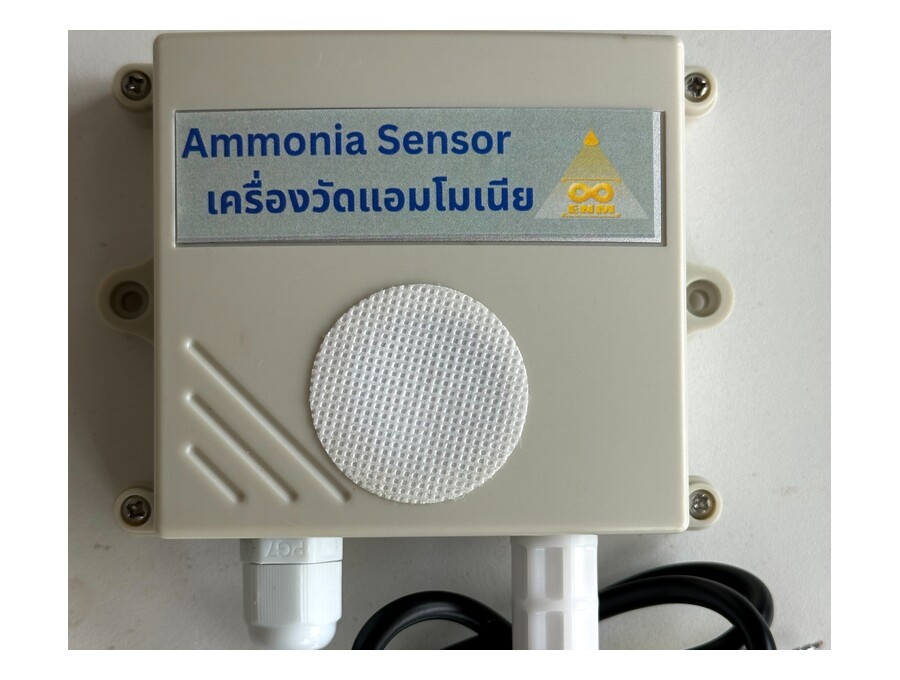
Ammonia NH₃ transmitter
ENM HX-NH3-N01 · wall mount, waterproof · extended-probe version M30×1.5
- Ranges 0–50 / 0–100 / 0–500 / 0–1000 ppm
- Accuracy ±8% FS (high-resolution version ±5% FS at 100 ppm)
- Rated −40 to +80 °C, 0–100 %RH — survives house conditions
- Optional OLED display for reading on the spot
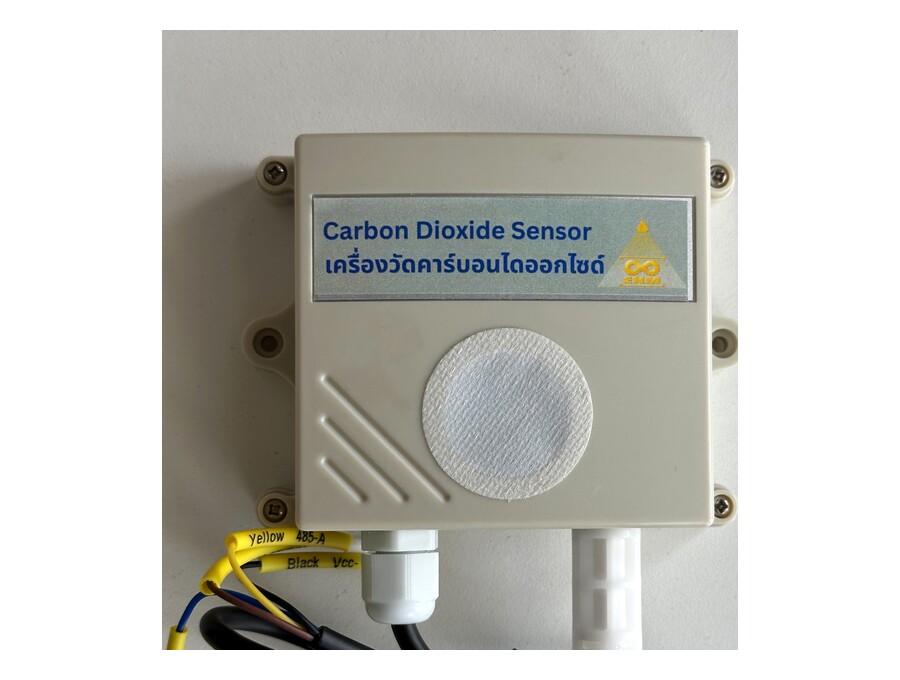
CO₂ + temperature + humidity, 3 in 1
ENM HX-CO2WS-N01-2 · SKU CO-HX-0001 · NDIR infrared sensor
- CO₂ 0–5000 ppm (0–2000 and 0–10000 ppm also available)
- Accuracy ±(50 ppm + 3% FS) with built-in temperature compensation
- Temperature ±0.5 °C · humidity 0–100 %RH
- Infrared measurement, so it does not drift the way electrochemical cells do
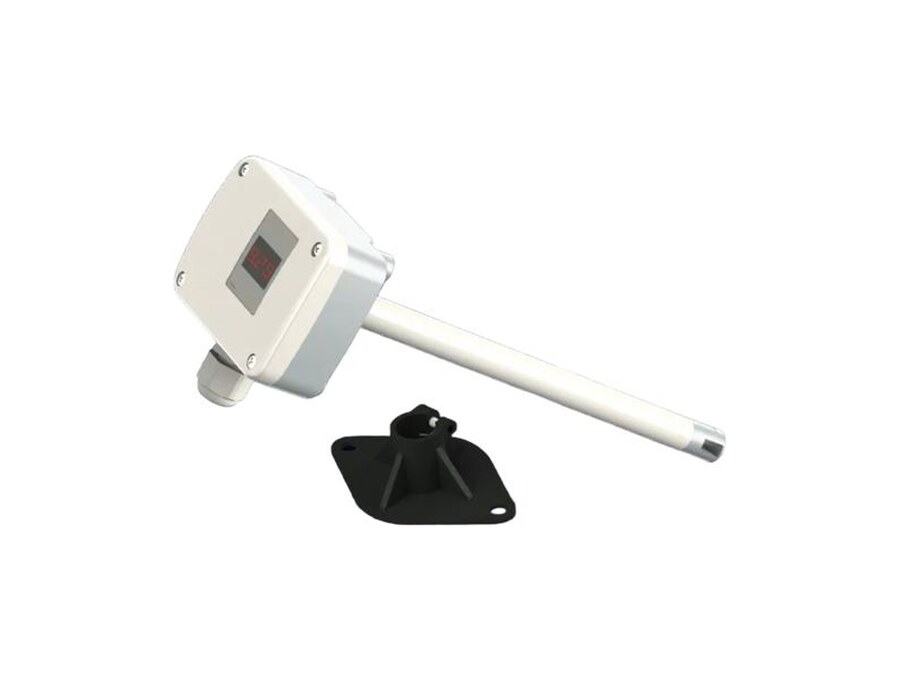
Duct air-velocity transmitter
ENM W410G1 · SKU WS-HX-0001 · thermal (hot-film) · probe Ø14 × 220 mm
- Six selectable ranges from 0–1 up to 0–30 m/s
- Resolution 0.01 m/s, accuracy 3%, no zero drift
- On-board LED display — readable without a control system
- Corrosion-resistant housing, IP65
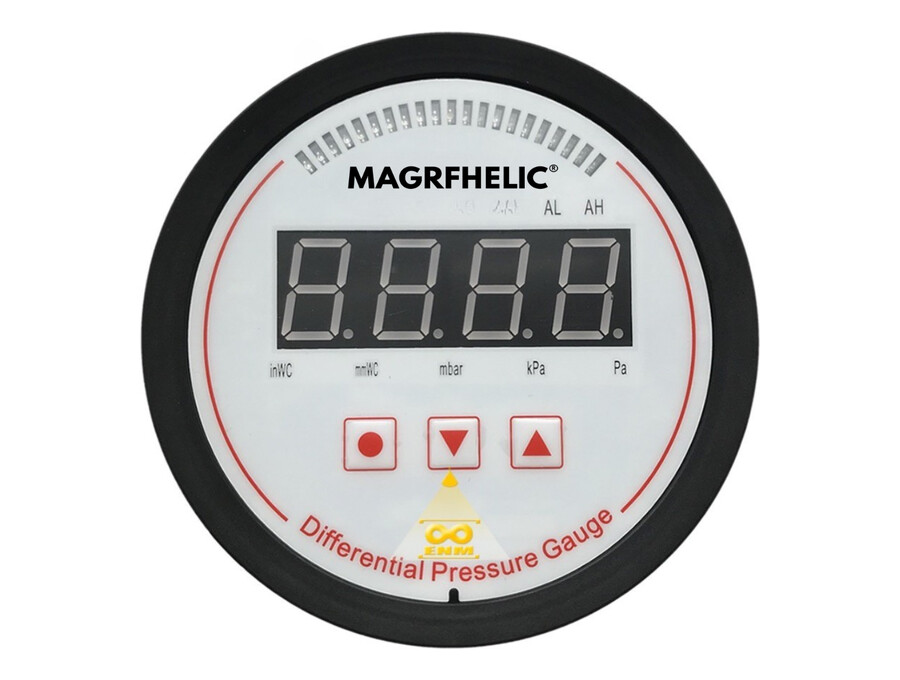
Digital differential pressure gauge
ENM TS-4000 · round panel gauge Ø114.5 mm · an ENM group product
- Ranges from 0–60 Pa up to 0–10000 Pa, plus bidirectional ±30 to ±5000 Pa
- Display units selectable: Pa / kPa / mbar / mmWC / inWC
- High and low alarm setpoints (AL/AH) set at the gauge
- Averaging 1–255 s, so gusts do not make the reading jump
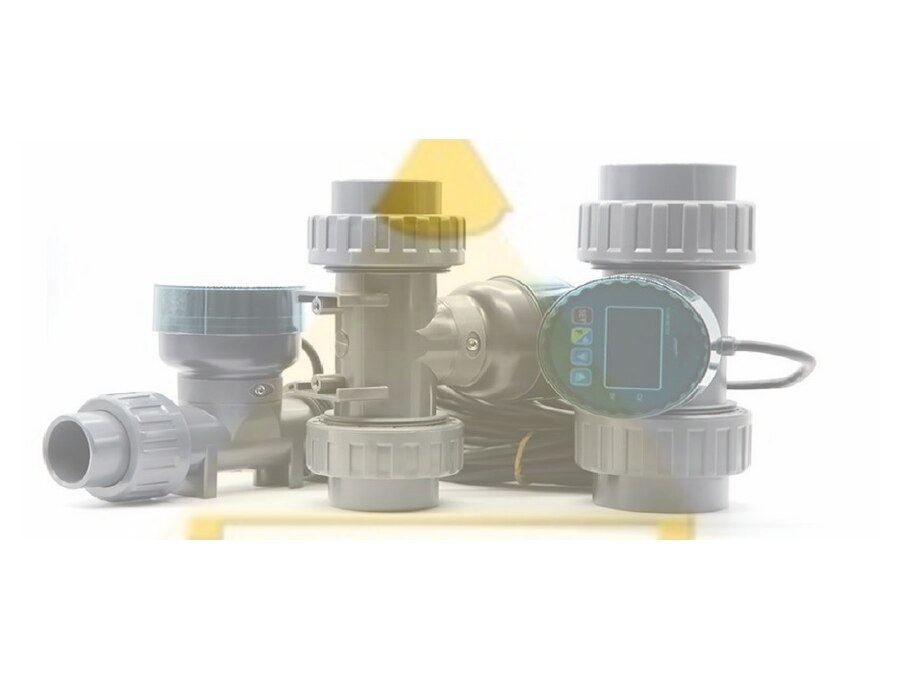
Paddle-wheel flow meter with RS-485
ZJLCD-485 · DN25 / 32 / 40 / 50 / 65 / 80
- Three readings at once: instantaneous flow, running total, water temperature
- Accuracy ±5% · adjustable K factor per pipe size · units L / Gal / KL
- Two NPN control outputs with adjustable delay
- Acid and alkali resistant, non-clogging, flow range 0.3–10 m/s
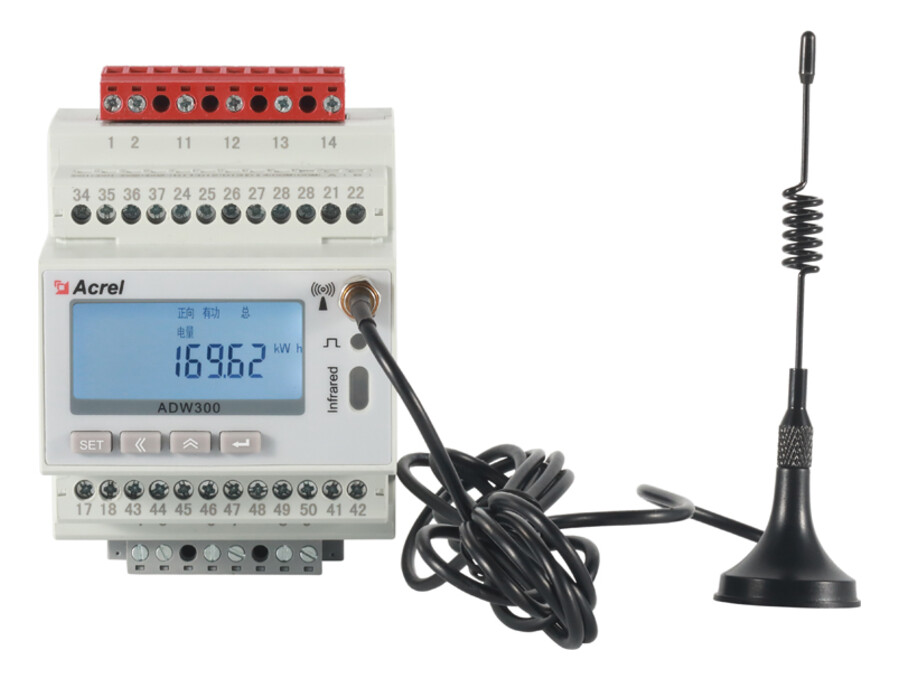
Three-phase energy meter
Acrel ADW300 · DIN-rail mount inside the distribution box · LCD
- Measures U, I, P, Q, S, PF and frequency, with kWh both imported and exported
- Class 0.5S accuracy to IEC 62053-22
- THDv and 2nd–31st harmonics, plus voltage and current unbalance
- A version with split-core CTs (ADW300W) fits without cutting the mains
Or take it as a package
You do not have to fit everything on day one. The packages below are ordered by what pays back first — start with the readings you need daily, then add the ones you tune the system with.
Starter
A house with nothing measured beyond a thermometer
- CO₂ + temperature + humidity, 1–2 points per house
- RS485 trunk run with room to expand
- Read at the device, or into your existing controller
- Mounting positions specified against your house drawing
Standard
The full air picture — enough to answer whether the house is ventilating properly
- Everything in Starter
- Adds NH₃ at bird level
- Adds air velocity for tuning the tunnel
- Adds static pressure for setting the inlets
- Alarm thresholds configured on every reading
Full system
Farms reporting to an integrator, or watching several houses at once
- Everything in Standard
- Adds the water flow meter
- Adds per-house electricity metering
- Gateway collecting and storing history
- Mobile dashboard plus alerts to LINE
- Placement design, on-site installation and handover training
Pricing depends on house count, number of measurement points, cable runs and site installation, so we quote per farm. Send us your house dimensions and how many you have over LINE and we will come back with a figure.
Frequently asked
How far can the RS485 run, and how many devices on one line?
Will it connect to the control system we already have?
Does it need calibration, and what maintenance is involved?
What happens to the data during a power cut?
Can we install it ourselves, or does ENM have to come out?
Need the detailed specifications?
Manuals, Modbus register tables, wiring examples and a measurement-point layout for your own house — ask over LINE. Tell us your house dimensions and how many houses, and we will reply with a proposal that fits the site.